A practical guide to nail fungus care
Learn how iodine is discussed, what the evidence can and cannot tell us, and how nail growth timelines shape expectations.
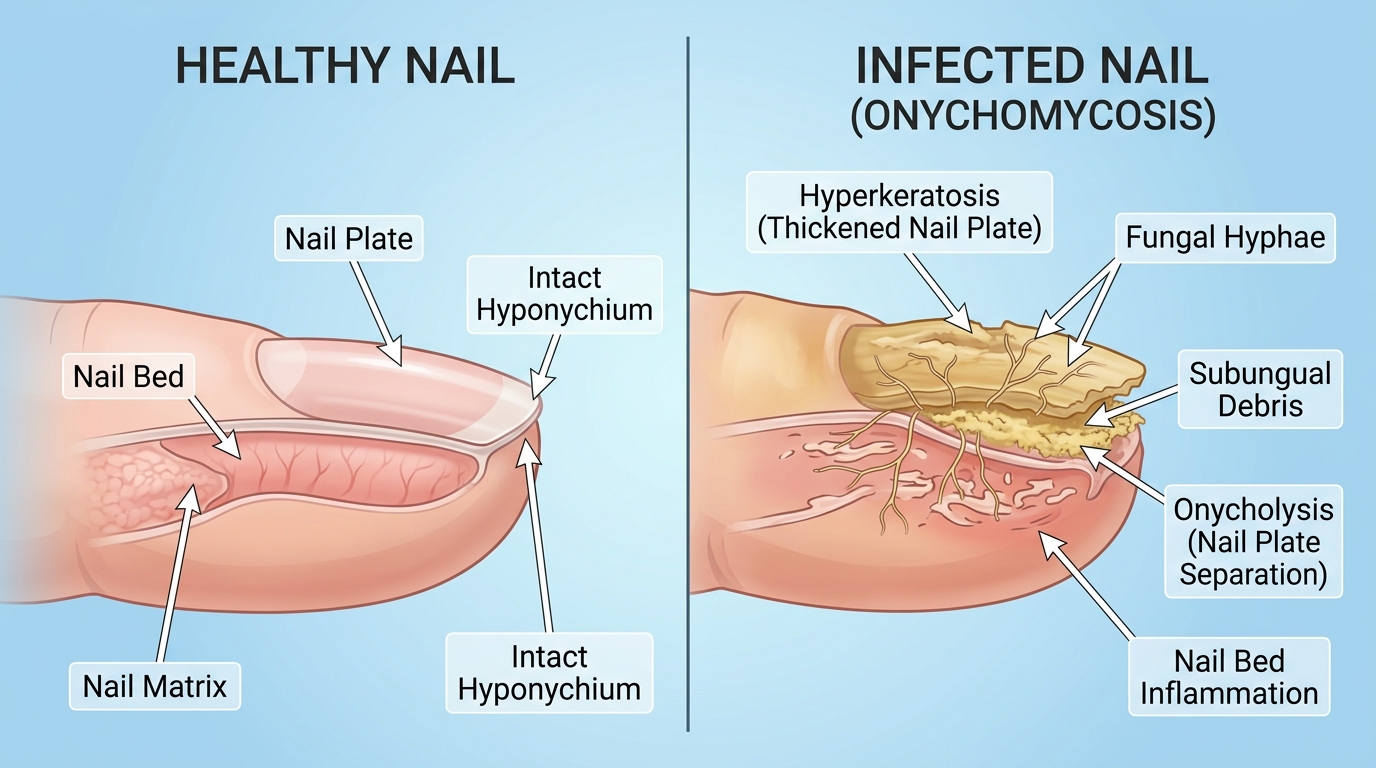
How nail fungus can invade in 30 seconds
A simple visual explainer: fungal particles can begin near the nail edge, spread under the nail plate, and leave debris that makes the nail look thicker or lifted.
Educational only. For organism types and a static diagram, see the fungal types and nail invasion guide.
Has Your Nail Fungus Been Coming Back for Years?
You may have tried creams, lacquers, or prescription options. It can look better for a while, then return or keep changing.
You're not alone. This is the frustrating reality of nail fungus — and here's what nobody told you:
- The fungus lives under your nail, not on top
- Most treatments never reach it
- Your nail grows at its own pace — and age matters
- Even after killing the fungus, nothing protects the new nail
The useful part: once you understand these four factors, it becomes easier to set realistic expectations and avoid common mistakes.
Why iodine gets discussed for nail fungus
For over a century, clinicians have used iodine antiseptics as broad-spectrum skin disinfectants. In nail-care discussions, the important question is not only whether iodine has antifungal activity, but whether enough liquid can contact the affected nail area.
Iodine. Specifically: povidone-iodine (iodophor).
In 2006, a retired physician published a case report in the Canadian Medical Association Journal describing his own severe toenail fungus improving after one drop of 2.5% iodine tincture per day. Total cost reported: $3.27.
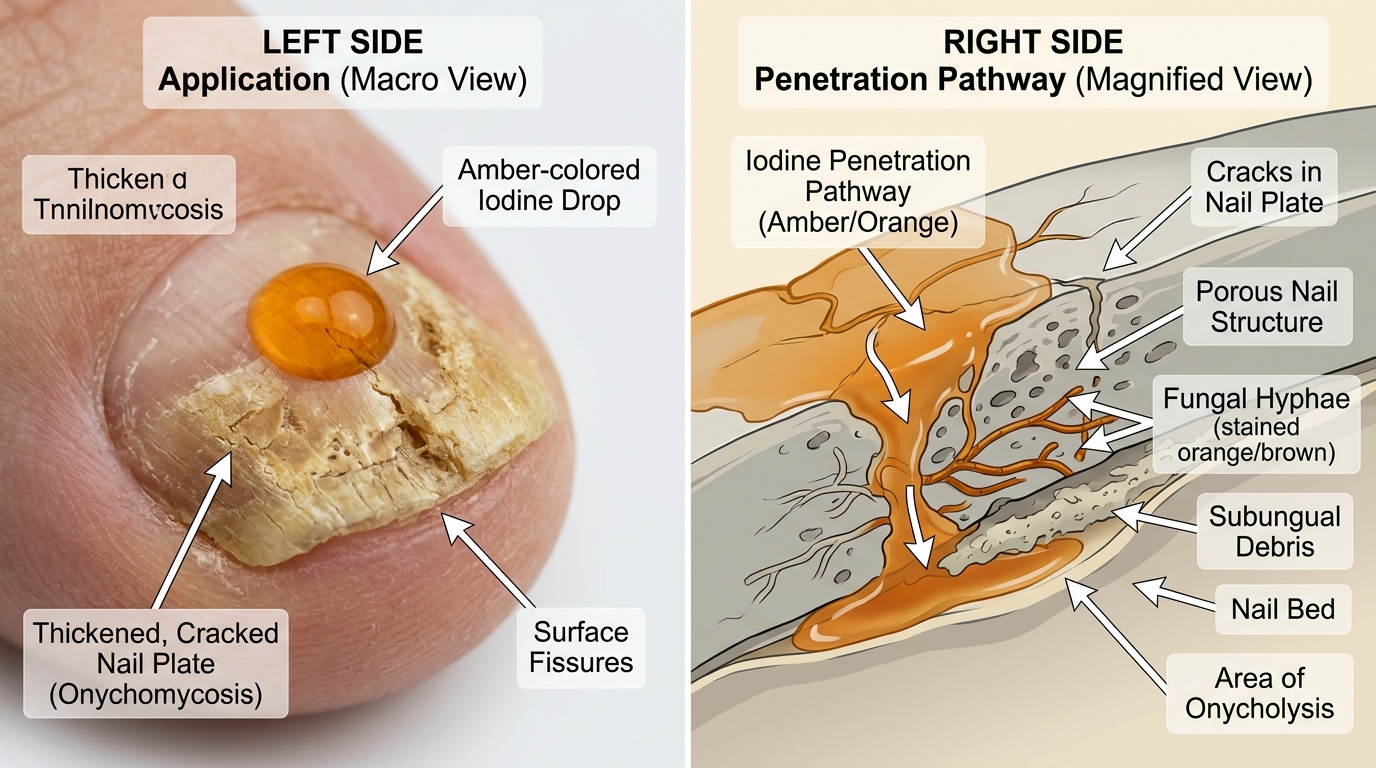
That does not make iodine a guaranteed treatment, but it explains why some readers consider it worth discussing with a clinician before starting a home routine.
How iodine may help on direct contact
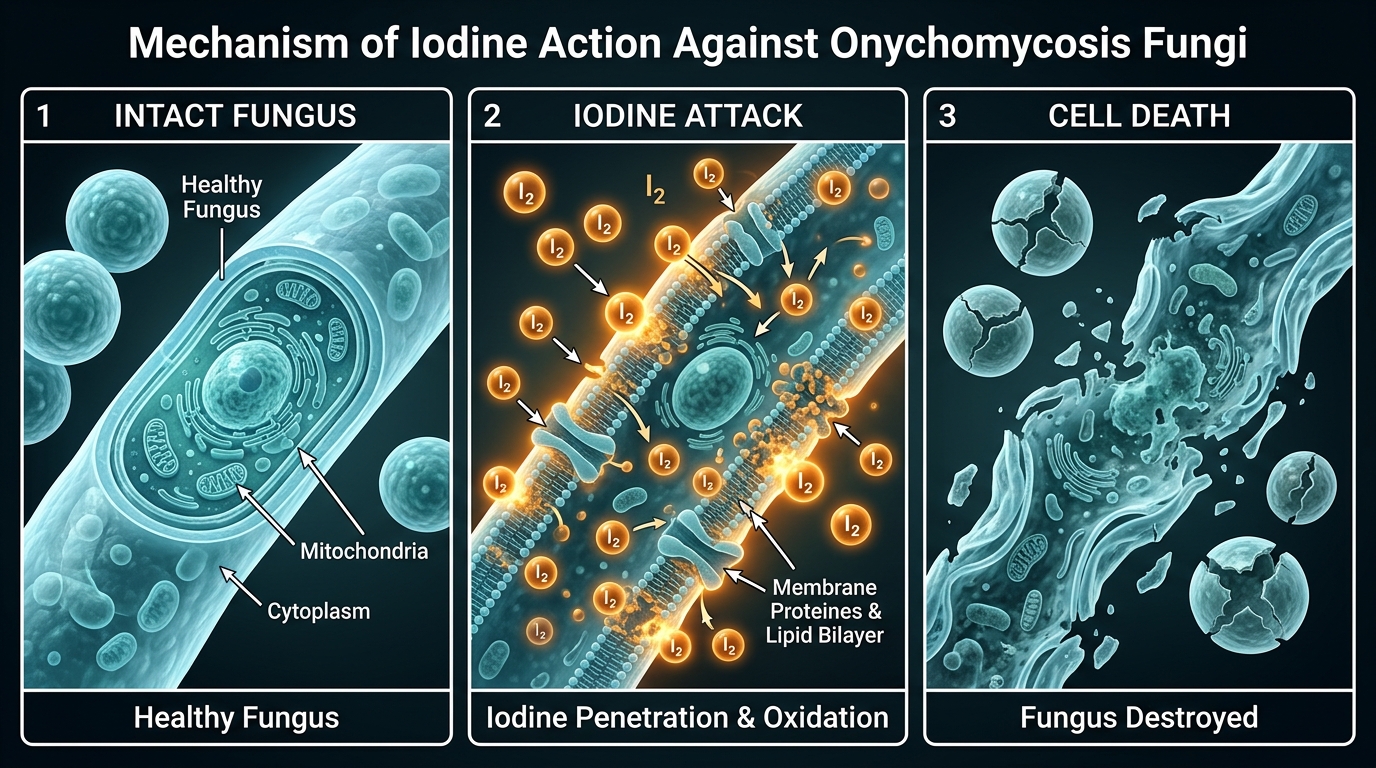
Iodine antiseptics can inactivate many microbes on direct contact. Real toenails are harder because organisms may sit under or inside thickened nail tissue.
Penetrates
Iodine molecules enter the fungal cell wall and membrane
Oxidizes
Destroys proteins, enzymes, and DNA inside the cell
Collapses
Direct contact can damage fungal cells in lab settings
Lab studies show iodine can rapidly inactivate many microbes on direct contact; real nails are more complicated because the fungus may sit under or inside thickened nail tissue.
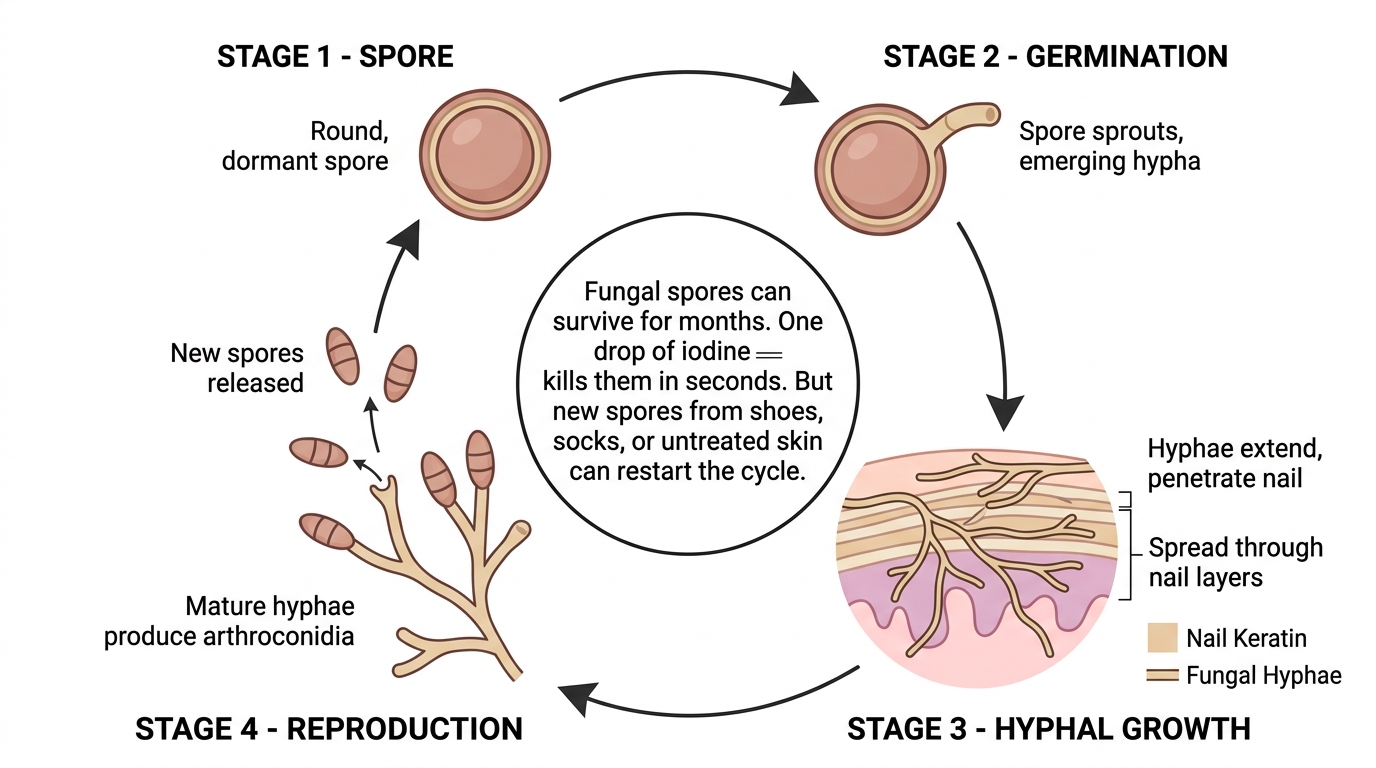
Killing the Fungus Is Only Half the Battle
Here's why nail fungus keeps coming back — and why a simple daily routine is the answer.
🔄 The Fungal Life Cycle
📈 Your Nail Growth by Age
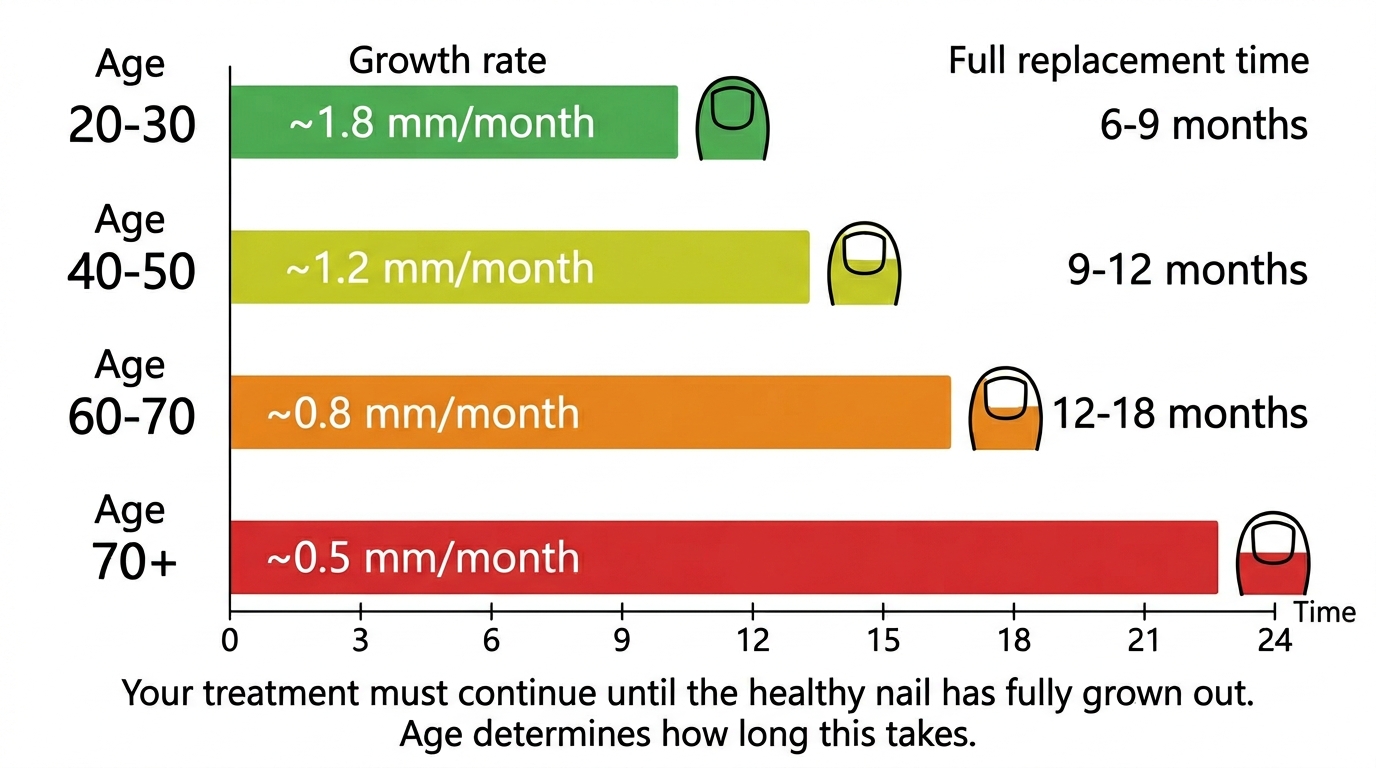
The key insight: Your new nail must grow out completely while protected by iodine. That takes 6 months at age 20, up to 24 months at age 70. This isn't the treatment failing — it's biology.
The Iodine Protocol in 4 Steps
30 seconds per day. Pennies per dose.
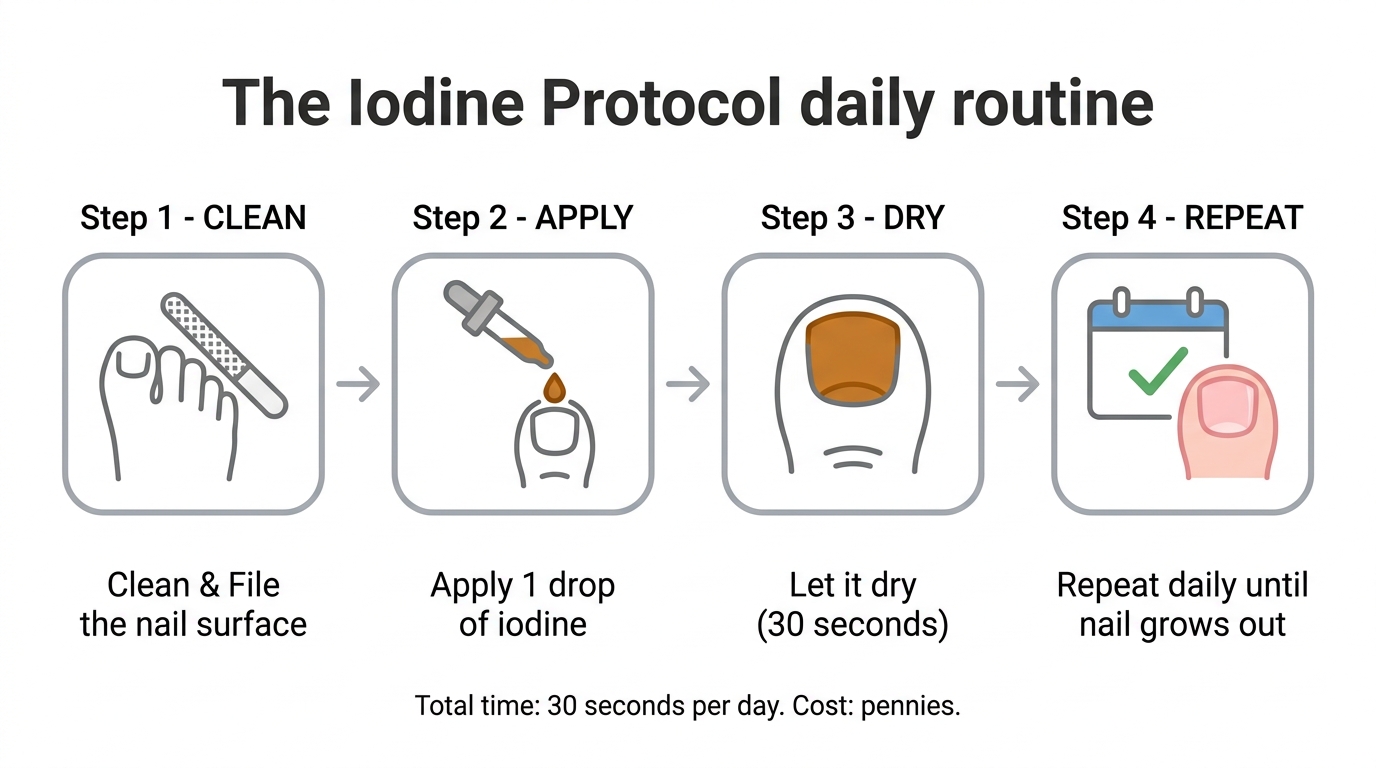
Clean & File
Wash your foot. Gently file the nail surface so iodine can penetrate deeper.
Apply Iodine
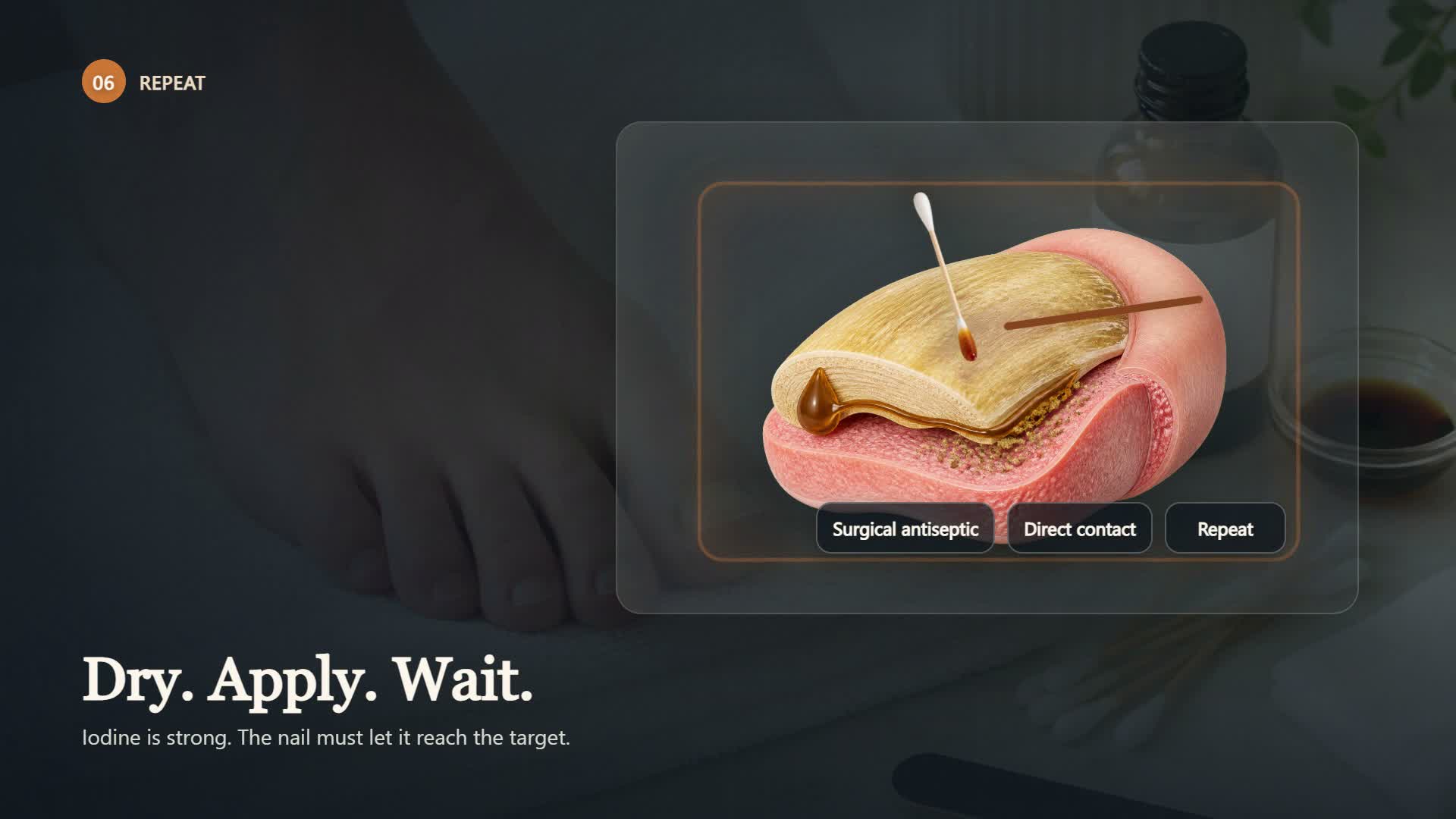
Apply a small amount to the nail and around the cuticle. Thin liquid may follow small cracks and lifted edges.
Let It Dry
Wait 30 seconds. The iodine dries quickly and continues working for hours.
Repeat Daily
Every day until the healthy nail grows out completely. Consistency is everything.
Not All Feet Are the Same
Your environment and lifestyle affect how you should approach treatment.
Athletes
Sweaty shoes + repeated micro-trauma = higher infection risk. Keeping feet dry is as important as the iodine.
Read more →Miners & Wet Workers
Long hours in safety boots or wet conditions create the perfect environment for fungus. Extra vigilance needed.
Read more →Diabetics
Poor circulation slows nail growth and healing. Consult your doctor first, then proceed with extra care.
Read more →Real People, Real Results
You're not alone in this. Stories from real people who have used iodine for nail fungus.
Have you tried iodine for nail fungus? Share your experience (with or without photos) to help others ask better questions and track realistic progress.
📸 Share Your StoryFocused nail fungus guides
Detailed answers for specific questions readers search before starting any nail-care routine. Browse all focused guides or estimate your nail growth timeline.
Understand the timeline before you begin
Nails change slowly. A routine only makes sense when you know what to watch for, what can go wrong, and when to seek medical care.